OUJING NURSERY
Our care approach
Age-based care, responsive relationships and staff collaboration
Care groups by age in months rather than fixed classes
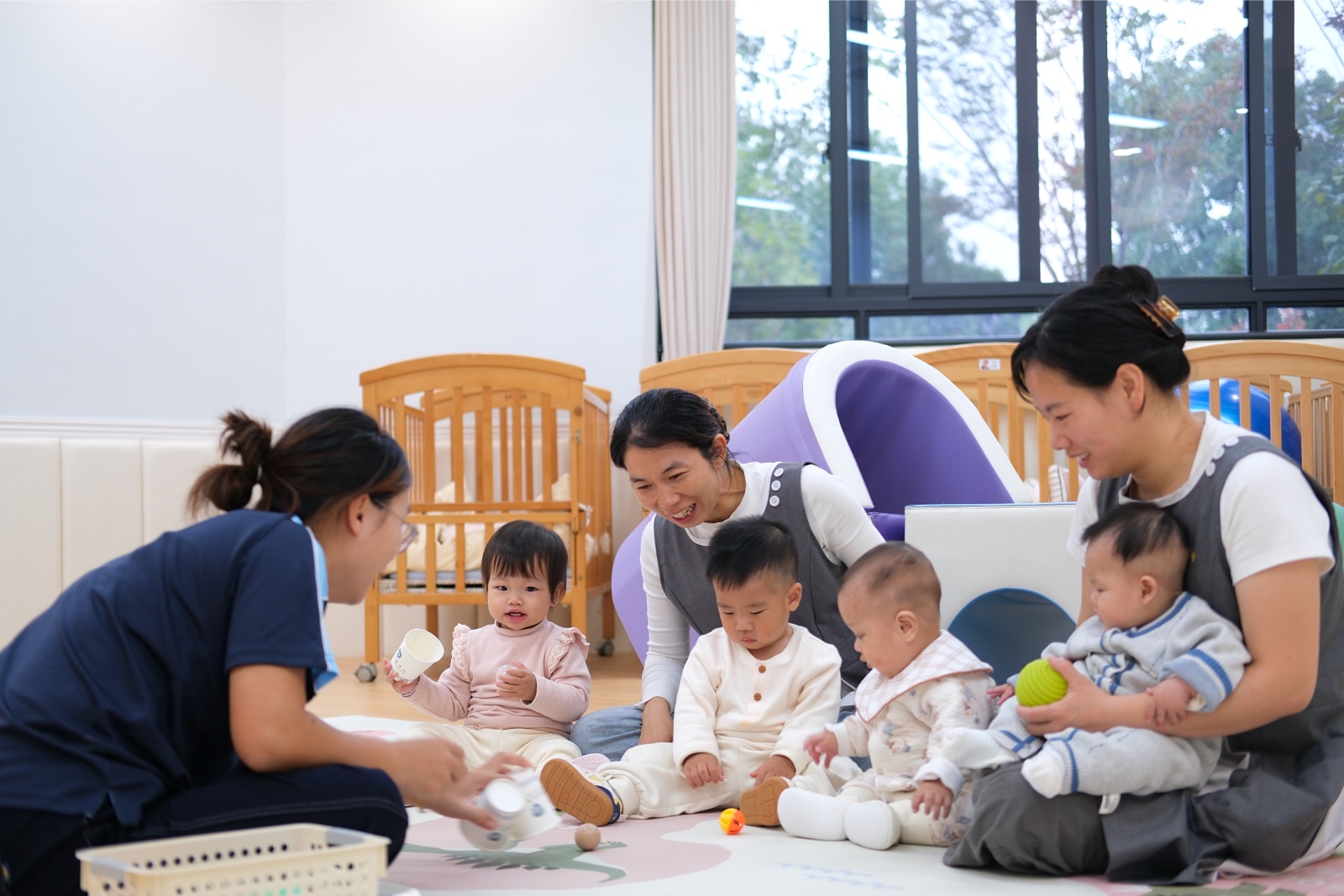
Care groups follow age in months, development and adaptation, matching activities, spaces and support to current needs.
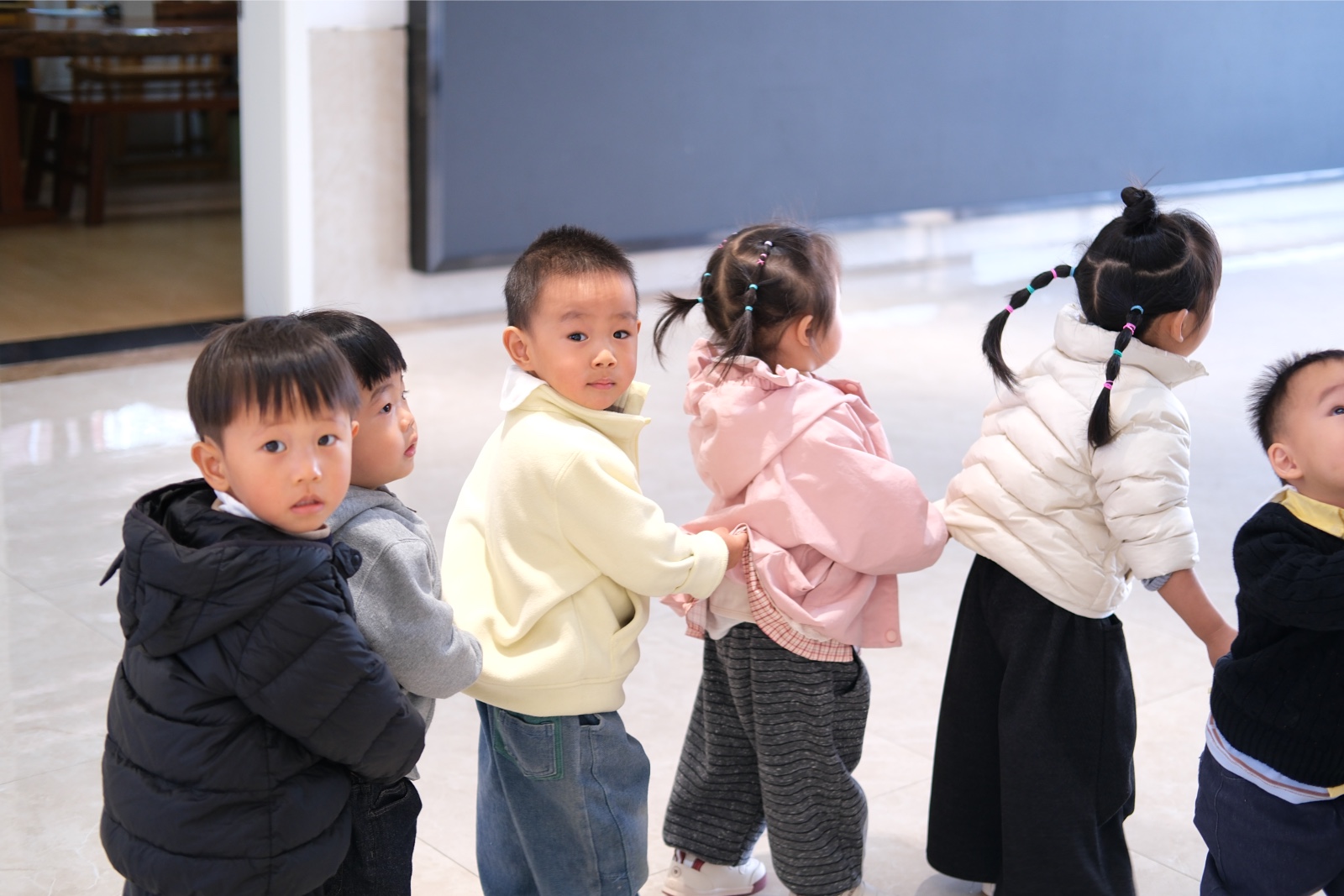
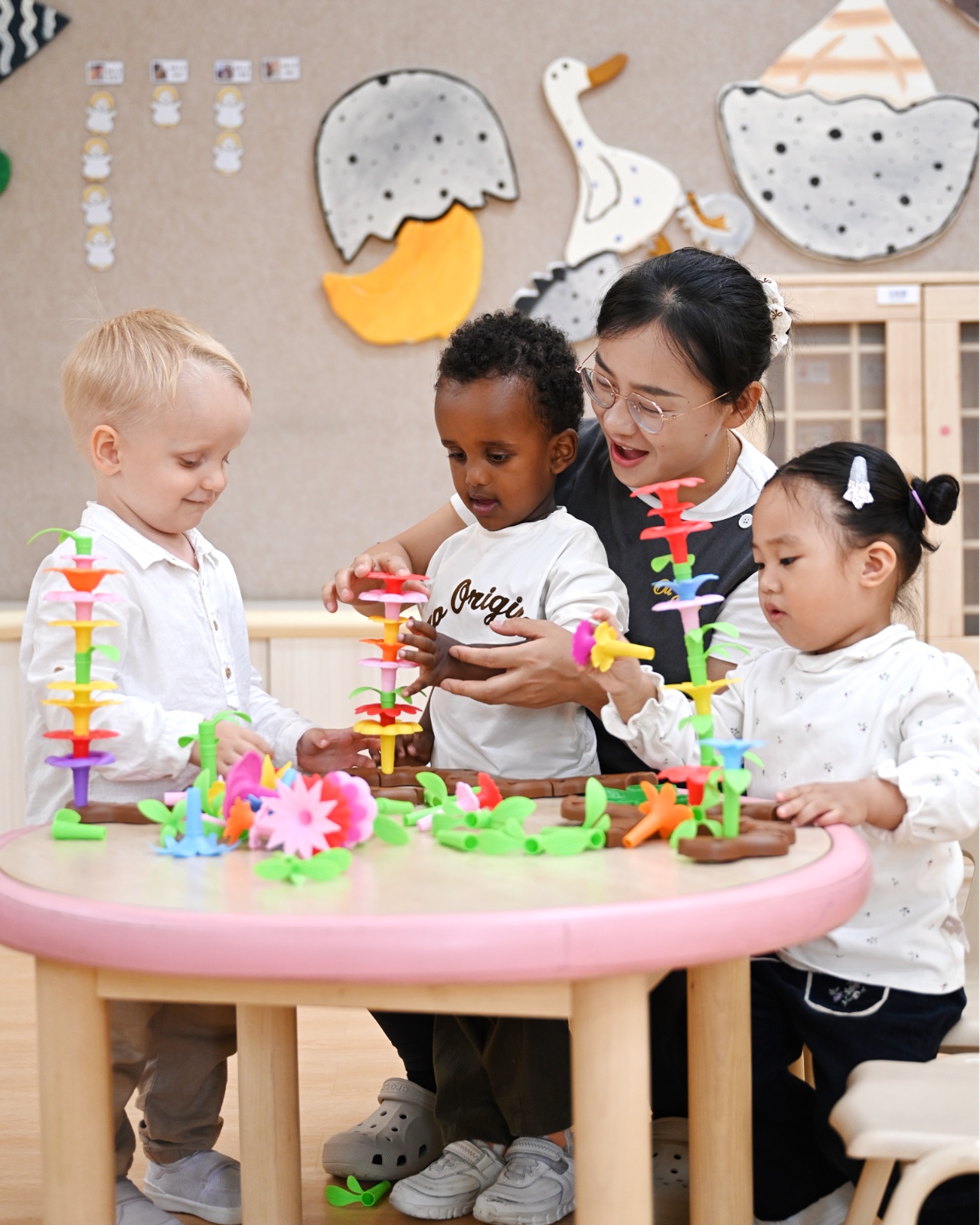
Responsive care with fewer children per caregiver
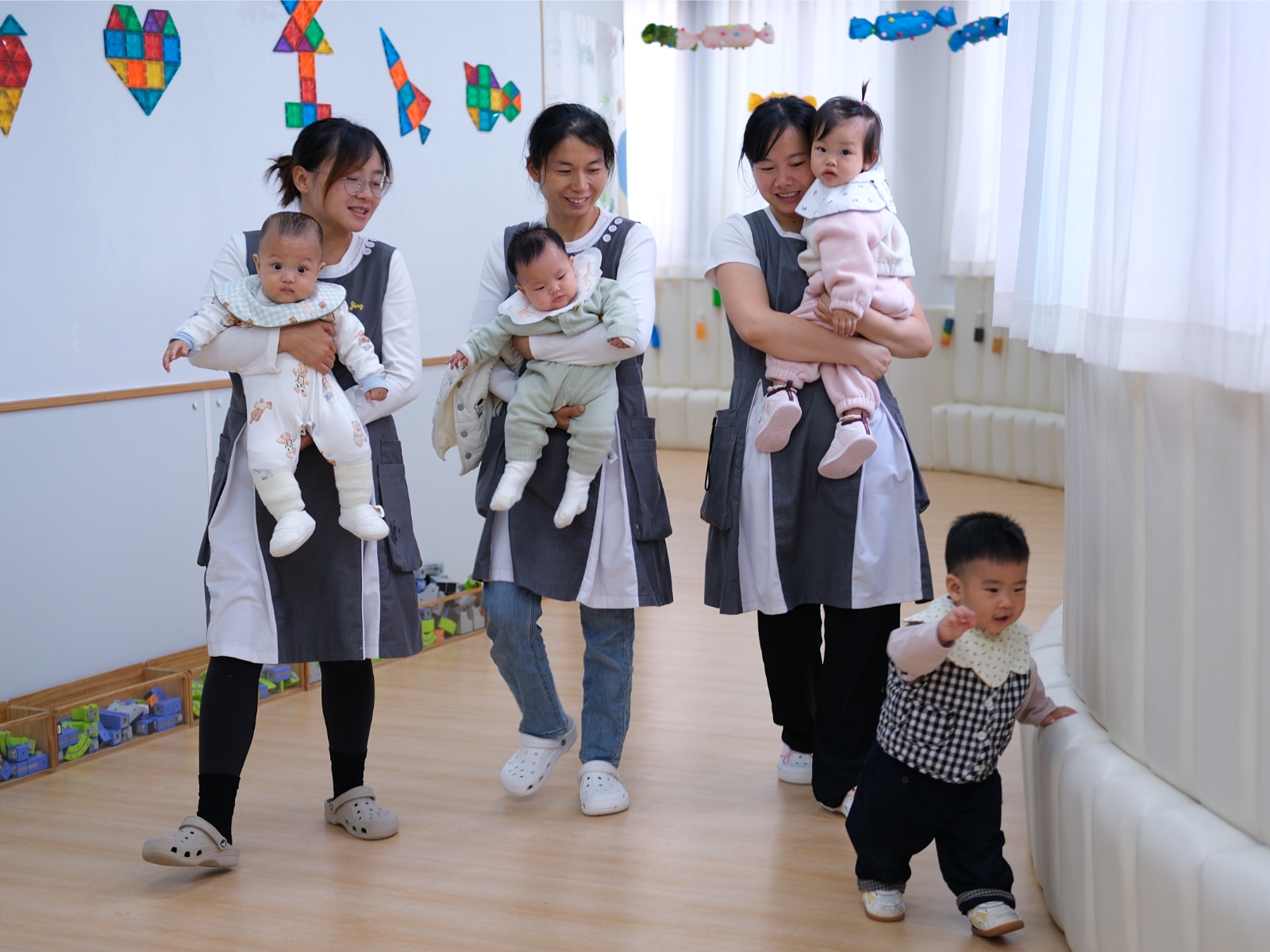
School materials list adult-to-child ratios of 1:2 for infants, 1:3 for older babies, 1:4 for younger toddlers and 1:5 for older toddlers. Applicable ages and current implementation require confirmation. Having fewer children per caregiver allows more time for individual observation, comforting and responses.
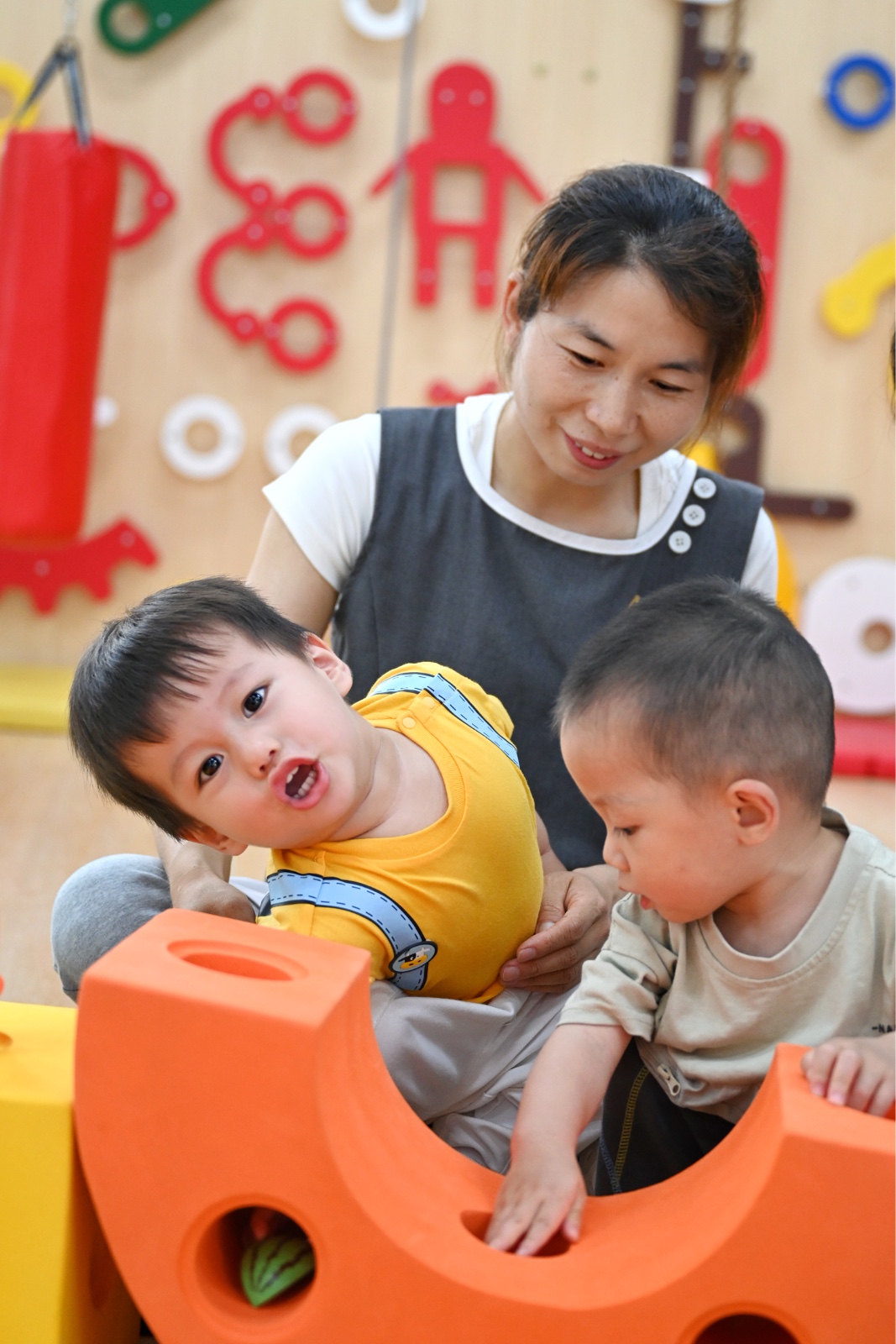
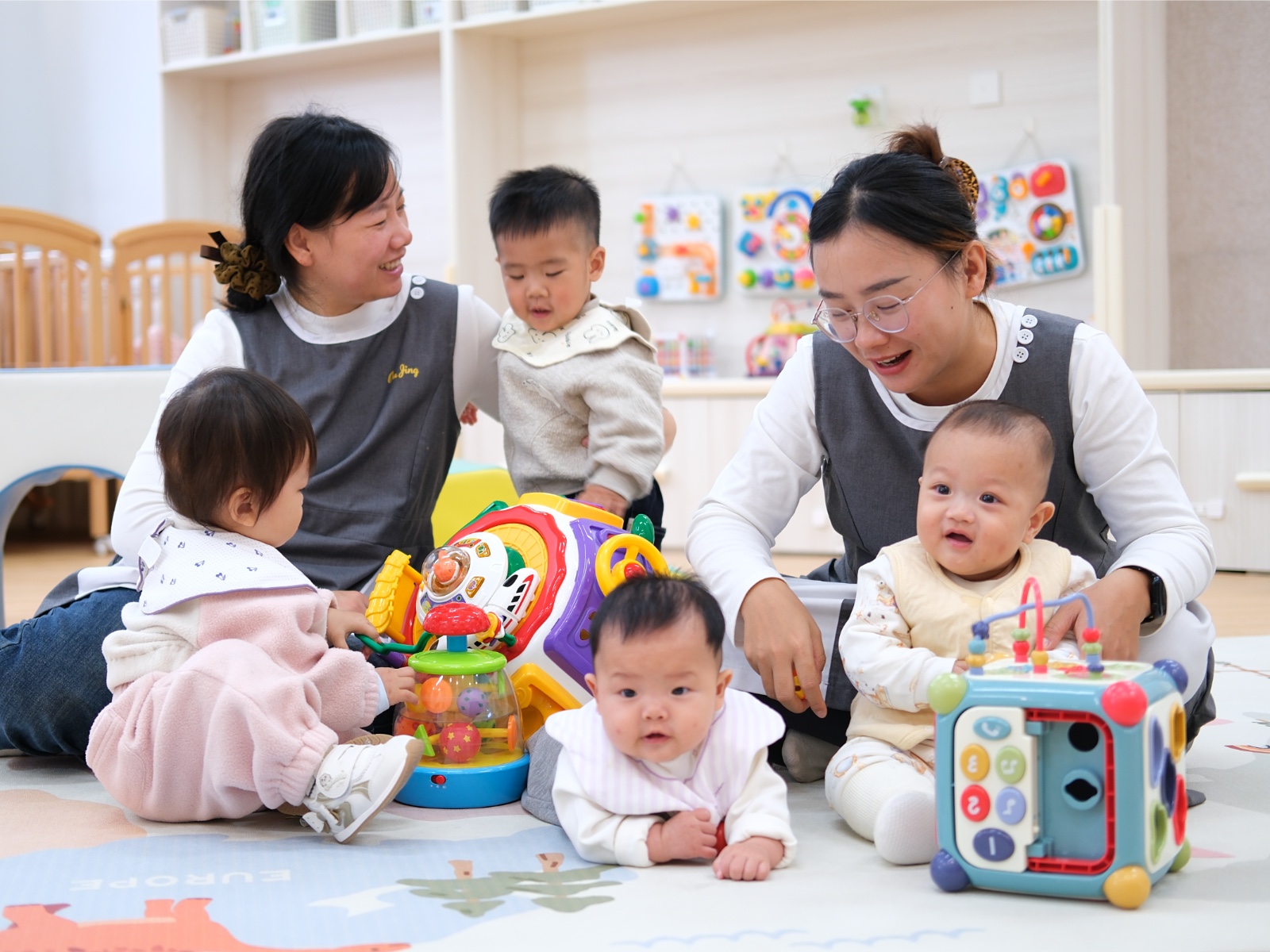
Continuity in caring relationships
School materials describe three-teacher care units. Two familiar teachers remain when one changes, with rotation beginning after children settle emotionally. Absence or role changes also prioritize familiar caregivers and stable routines. Current arrangements determine actual units.
Responding through everyday care
Before diaper changes, feeding, cleaning or rest, teachers tell children what will happen next and observe their responses through gaze, voice and movement. Where children can take part, they are given opportunities to choose and try, making care a shared interaction.
Professional teamwork and reflection
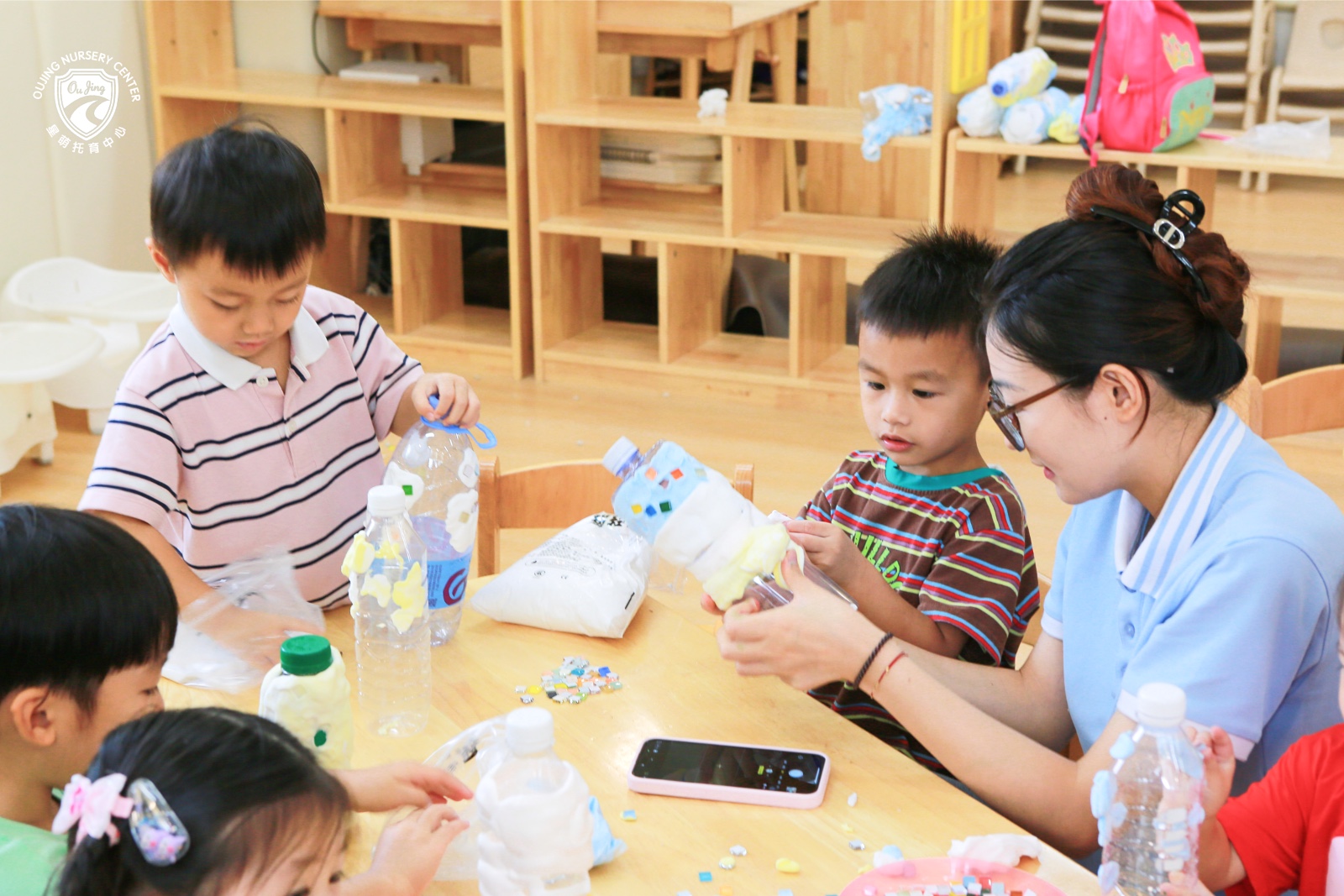
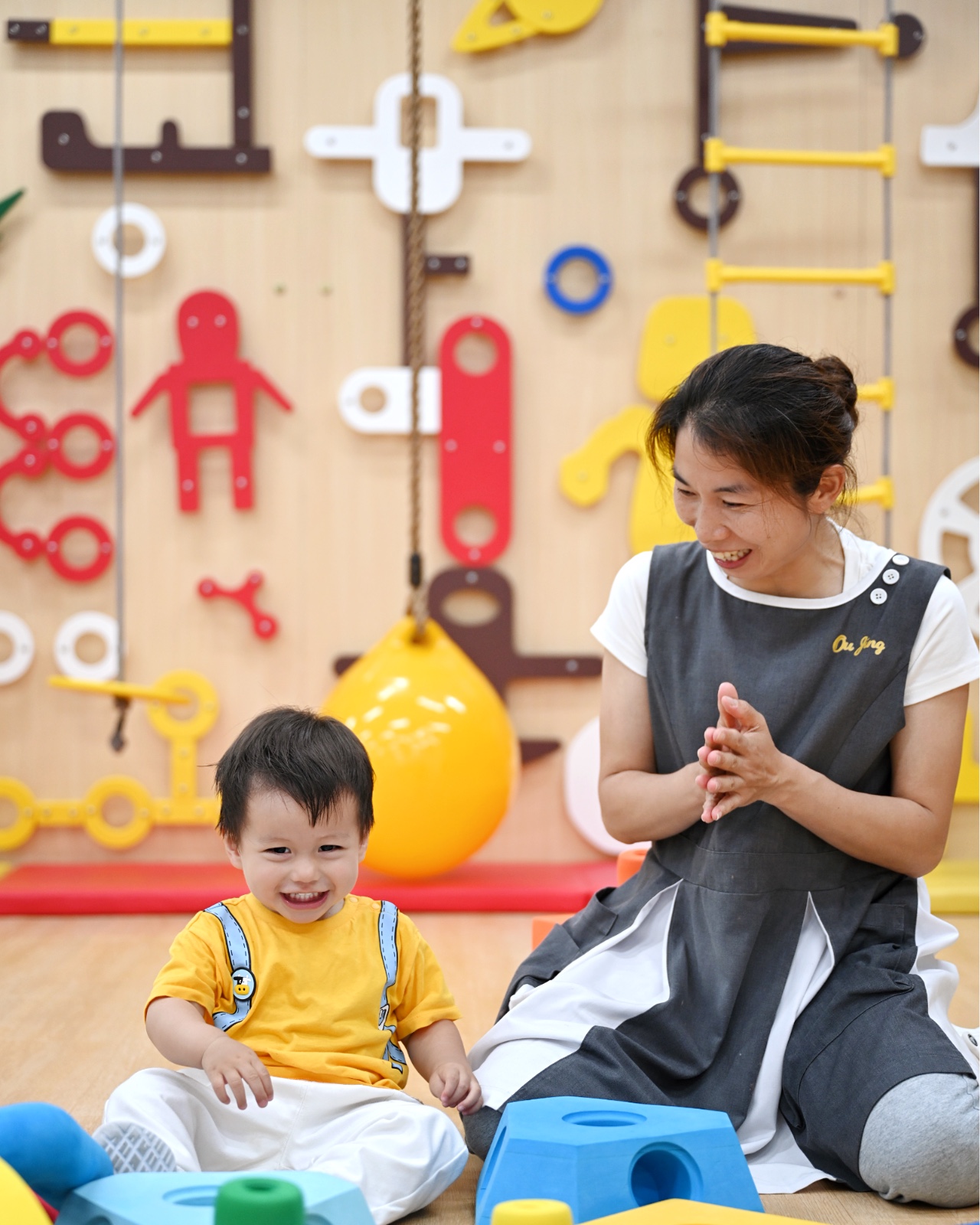
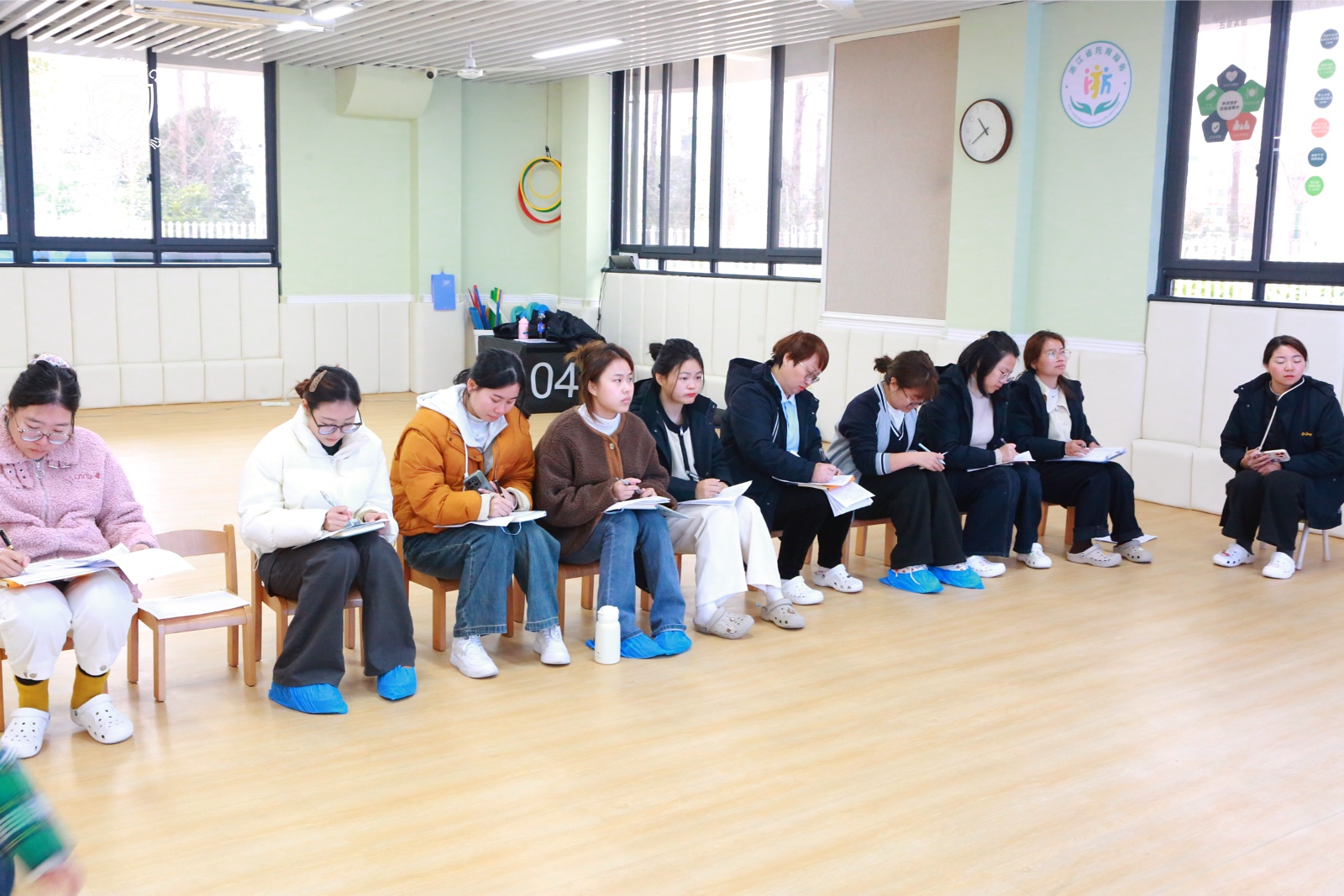
Teaching, care and health roles support the day together. Responsibilities, certification and staffing need current confirmation; observation, handovers and reflection put requirements into practice.
A guide for families
Putting our care approach into your child’s day
Xingmeng (Oujing) Nursery in Yiwu focuses on babies and toddlers aged 2–36 months. Age in months helps organize care groups; activity plans set different goals, and functional spaces accommodate different activities. Familiar caregivers support children by observing, explaining what comes next, waiting and responding.
These arrangements work together. What a child needs now guides the support adults provide, the materials they choose and adjustments to the day’s rhythm. Family routines, ways of expressing needs and experience of comforting the child also inform nursery life through conversations before starting and everyday communication.
Questions to explore during your visit
- What support does your child currently need with feeding, comfort, exploration or interaction with other children?
- How do observations guide coordinated adjustments to groups, activities and care?