
OUJING KINDERGARTEN
Growth and feedback
Development is visible in every moment of understanding, response and effort, alongside final outcomes.
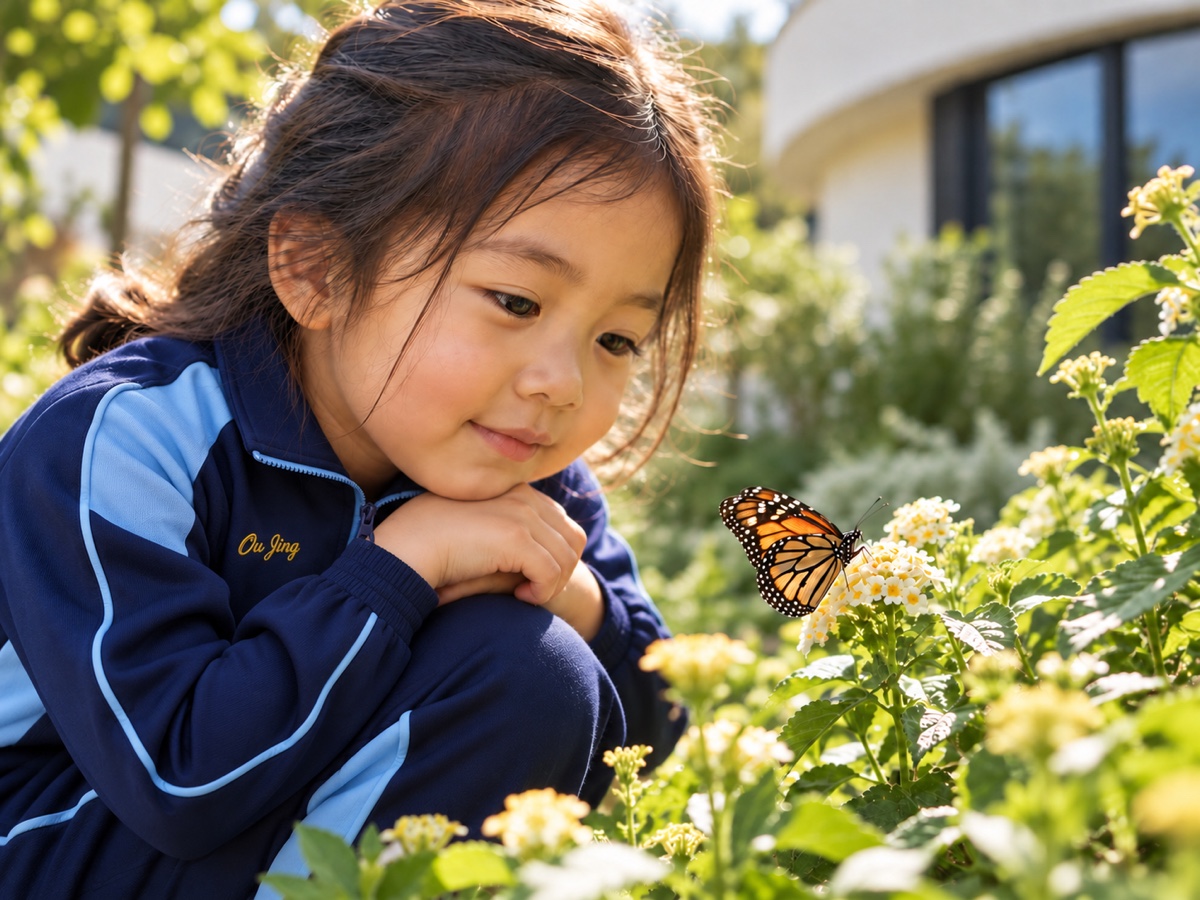
Observing genuine communication
Understanding an invitation, answering questions, expressing needs and negotiating with friends all offer insights into language development. Teachers connect observations with context and respect individual rhythms.
Making the process visible
Feedback can draw on interactions, photographs of the process, work and observations to explain understanding, attempts and possible next steps.
Oujing Kindergarten carries out one-to-one English interaction assessments each term, with six international teachers taking part. Through natural interaction conducted entirely in English, teachers observe children’s listening comprehension, responses and spontaneous expression. The full assessment is recorded in audio and video so the process can be reviewed. Assessment complements everyday observation; a single number does not replace a complete picture of development.
Respecting the boundaries of children’s records
Children’s recordings, observations and family communication serve educational purposes and are not automatically public. Personal records are managed separately from publicity media, and public use requires confirmation of permission and scope.
A guide for families
Connecting observations at kindergarten with support after graduation
Once each term, Oujing carries out one-to-one English interaction assessments. Six international teachers contribute to the assessment work, and audio and video records are kept. One-to-one means individual interaction with a child; it does not mean a child faces six teachers at once. These records are considered alongside everyday observations when discussing changes in understanding, responses and spontaneous expression.
After Oujing graduates enter primary school in China, the kindergarten offers them free weekend English classes with international teachers. Children are grouped by their current abilities, with vocabulary, grammar, reading and writing developed alongside listening and speaking. Assessment records help explain how a child is developing now, while the continuing classes offer further opportunities to practise. Neither promises a uniform level of attainment or higher test scores.
Questions to explore during your visit
- Can records from different periods help show the situations in which a child is more willing to communicate?
- How are the continuing classes for graduates grouped, and how can families find out about the arrangements?
FURTHER READING
You may also be interested in
Choose a topic to explore further.